
Raising Guide Dog Puppies in the Basel Area

Have you ever seen a guide dog working around Basel? You might have noticed that there are quite a few – and you’d be right. Baselland is home to two of Switzerland’s guide dog schools, one in Allschwil and one in Liestal.
How It All Started
For us, becoming puppy raisers started as a compromise with our kids. They wanted a puppy; we didn’t want the long-term commitment. As puppy raisers, the kids would get the puppy experience they wanted, and as a family we would get the chance to really make a difference to someone’s life.
Getting Our First Puppy

I registered our interest with the Liestal school and set up a home visit so they could come and meet us and check our suitability. A couple of months later I got a phone call to say that there would be a puppy for us in April.
We were allowed to choose a name for her, in agreement with the school. We went through a couple of options and settled on Zula, which means ‘brilliant, shining or ahead’, which we thought sounded like great characteristics for a guide dog!
On the day we got her, I went with the Puppy Development Manager from the school to pick her up. We brought the gorgeous little chocolate Labrador retriever back to our place and I got my first lessons on how to house train her.
We all quickly fell in love with her, despite the broken nights and accidents. We felt very well supported by the school, and it was such a relief to know that we could always call with any questions or problems.
What You Need To Be A Puppy Raiser

Time, patience and flexibility are all necessary.
The time commitment is big. The puppies aren’t supposed to be left alone for more than an hour or so for the first few months, so you need a lifestyle that the puppy can fit in with. I’m a freelancer, so I work mostly from home. My clients quickly got used to seeing Zula on Teams meetings and were very understanding when I occasionally had to dash outside with her! There are also mandatory training sessions once or twice a month.
Your biggest job as a puppy raiser is to show the puppy the world and slowly get them used to being calm and confident in a range of situations. It’s a lesson in patience because puppies get tired quickly, and, like toddlers, an overtired, overstimulated puppy is a recipe for chaos.
Ideally, you should involve the puppy in your daily life, but equally, you need to work out when enough is enough. For example, the first time I took our puppy to the supermarket we just went in and stood in the entrance for a few minutes. The next time I bought a bottle of milk and went through the self-checkout. After a few months, I could buy a small basket of things and wait in a (short) line at the checkout. Tiny steps!
For me, it was also important to have a couple of trusted people that we could leave the puppy with for a few hours.
There are plenty of ups and downs to navigate. Sometimes it’s stressful and frustrating (particularly during puberty when it feels like they’ve forgotten everything they’ve ever learnt!), but more often it’s hugely rewarding and lots of fun. Our whole family agrees that we laughed more than usual during those 18 months.
Good to Know:
They prefer families with kids aged 4+ (mainly for your own sanity!)
All equipment and food is provided by the school
Reasonable German is necessary – I would say B1 spoken would be good enough. The training is of course all in German/Swiss German. This is a great way to practice and improve your German!
With a cute puppy in a guide dog jacket, you will meet more people in your neighbourhood than you ever imagined!
What Happens If The Puppy Doesn’t Become A Guide Dog?
Although the puppies are all carefully selected, there are a number of reasons why a pup might not end up being suitable for training. After they turn one, they go through a series of health and temperament assessments to check their suitability. If they can’t go into the programme, they’re made available for adoption. As a puppy raiser, you have the chance to adopt the puppy, but of course you don’t have to.
The Guide Dog School in Liestal
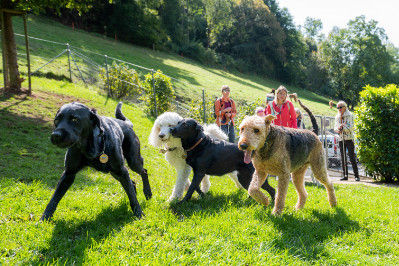
Most people probably imagine a Labrador or a golden retriever when they think of guide dogs, but in Liestal there is a big range of breeds – poodles, German shepherds, barbets and more. Different breed characteristics make it easier to match the dogs to the different lifestyles and needs of clients.
As a puppy raiser, you’re very well looked after and supported by the school. There’s a curriculum to follow and a very detailed manual that covers all aspects of puppyhood and puberty. They also hold two seminars a year for puppy raisers.
The guide dog school in Liestal is easily accessible by public transport, and it also has great parking. Puppy raisers come from all over the country for the monthly training sessions, plus there is a local group for Basel. It’s a nice way to meet people.
Even if puppy raising isn’t an option for you, there are other ways to support the guide dog school, such as making a donation or volunteering. There’s also the option of being a holiday caregiver for a dog. Following and sharing on social media also helps – you never know who might be inspired to help.

The Liestal Guide Dog School | VBM was founded in Muttenz in 1986. Since 2009, the school's headquarters, training centre, and seminar centre have been located in the "Weideli" area of Liestal.
Branch offices are located in Bern and in French-speaking Switzerland. Their dogs are deployed throughout Switzerland.
The guide dog school is a non-profit, tax-exempt institution and is recognized by the Federal Social Insurance Office. As a member of the International Guide Dog Federation, Assistance Dogs International, and SZBlind, it also has a strong international professional network.
People with disabilities are at the heart of their work. The school provides them with ongoing support and guidance. In addition, they regularly offer multi-day seminars where they address challenges, train human-dog teams, and offer a platform for exchanging experiences.
The school provides individualized training for each dog, beginning this process in puppyhood by providing targeted guidance to the dog trainers. The young dog trainer families care for the puppies until they are ready to become guide dogs or service dogs. During their training, the dogs live with the families of the instructors.
Facebook: Blindenhunde Liestal
Instagram: blindenhundeschule_vbm
Karin Waldhauser

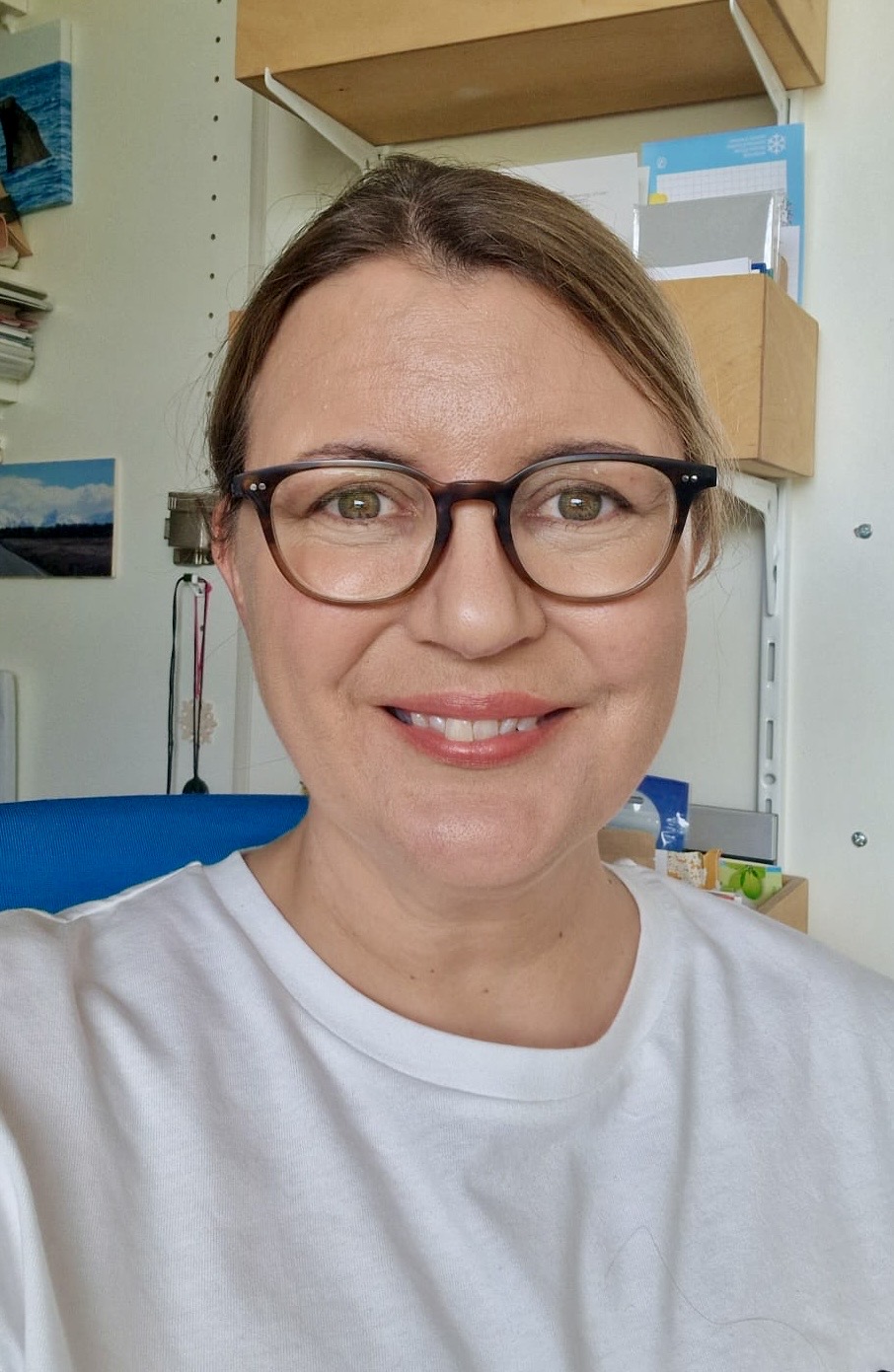
Karin lives with her family in Liestal and works from home as a proofreader. She loves to read and write, explore new parts of the local area, and enjoy this beautiful country.


Comments