
Clean Basel: The System Behind This Immaculate City

Walking through Basel City early in the morning and you’ll notice something very eye-catching — it is almost always clean. Streets are swept, bins are empty, and even after major events, such as Fasnacht, Herbstmesse, Stadtlauf, and the Christmas Market, order is restored within hours. What looks effortless is in fact the result of a highly coordinated system involving hundreds of workers, strict regulations, advanced machinery, carefully designed environmental policies and supervision.

The Polluter Pays
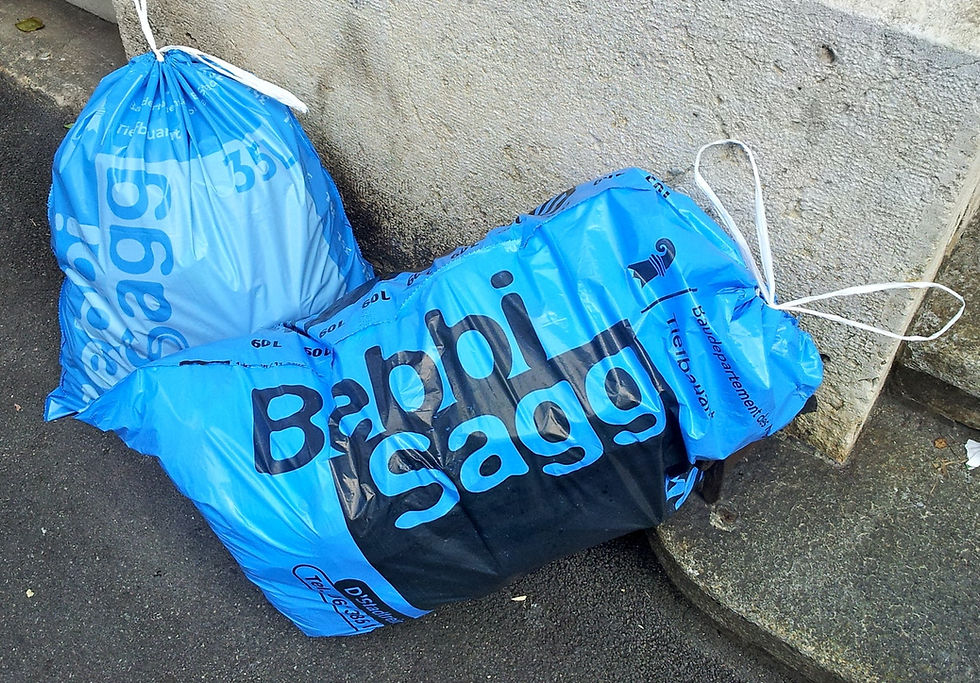
In Basel, there is a straightforward idea at the core of how to handle the waste: 'the polluter pays' — simply put, the person who makes the mess pays for it. This means that residents in Basel must use special garbage bags that they have to pay for, called Bebbi-Säcke (this is done in neighbouring municipalities with a special sticker) to get rid of the trash. The more waste a household produces, the more they must pay to get rid of it, which makes people think carefully about how much trash they make.

This system has several positive consequences:
It incentivizes waste reduction and recycling
It creates a steady funding stream for waste collection
It ensures fairness—those who produce more waste pay more
A Strict Schedule
Trash pickup has to happen at exact times. In Basel you can only put your garbage out during certain hours or you'll get penalized. This is really important because without these rules, even the best cleaning teams would have a hard time keeping everything tidy. If people just put their trash out whenever they wanted, it would be chaos. The schedule helps keep everything organized and makes sure the city stays clean.
Recycling and Waste Separation

Basel — and Switzerland more broadly — rely on a hybrid system: a strict paid garbage for residual waste combined with an extensive voluntary recycling infrastructure.
Residents must separate:
Glass (by colour)
PET bottles
Paper and cardboard
Metal and aluminum
Non combustible waste, e.g. ceramic etc.
In some places, food waste and other organic materials aren't always kept separate from other trash, and a lot of it ends up being burned, which isn't ideal. But things are starting to change and improve as some bio composting stations are being made available.
Incineration Process

In Basel, residents are required to separate their waste to ensure that much of it gets recycled. The waste that can't be recycled is taken to a special plant called a waste incineration plant, or KVA for short.
Basel’s waste system extends beyond city boundaries. The incineration plant serves a region of over 700,000 people and around 200,000 workplaces
Waste flows into Basel from:
Basel-Stadt and Basel-Landschaft
Parts of Germany (e.g. Lörrach)
Surrounding municipalities
This highlights an important point: urban cleanliness is not just a local issue—it depends on regional coordination and infrastructure.
Here’s how it works:
Waste is burned at a high temperature
Heat from combustion produces steam
Steam drives turbines to generate electricity
Excess heat is fed into a district heating network, warming homes across the city
This means your trash may literally be heating your apartment.
Waste incineration is controversial but carefully managed. The advantages to this process are:
It reduces landfill use dramatically
It produces energy (electricity and heating)
Emissions are controlled through highly efficient filtration systems
In Switzerland, there are strict rules to protect the environment, and special filters are used to clean up the bad stuff that comes out of incinerators. This makes burning waste a lot cleaner in Switzerland than in many other places.
It is not without it's challenges though, some of the following being:
CO₂ emissions from burning waste
Loss of potentially recyclable materials
Dependence on consistent waste supply
The Clean Dream Team

Keeping a city clean is not just about collecting bags—it’s about constant maintenance. Basel’s Stadtreinigung (city cleaning service) operates daily across neighbourhoods, managing:
Household waste collection
Street cleaning
Servicing the recycling infrastructure
Servicing public bins and enforcing illegal dumping
There are hundreds of employees working tirelessly behind all these sophisticated systems, which also rely on residents to properly handle their waste. Everyone works together to make sure Basel is as pristine as the renown Swiss image.
The system relies on a combination of people doing the work by hand and special machines, such as:
Environmentally friendly garbage trucks
Small and large street sweepers
Vacuum machines for fine debris
Water-flushing vehicles (Schwemmwagen)
Loaders and excavators for bulk waste
Special Events
Even under normal conditions, the system requires careful routing, scheduling, and coordination—especially in a dense urban environment with narrow streets and heavy pedestrian use. But if you want to understand the true scale of Basel’s cleaning operation, look at Fasnacht, the city’s famous carnival.

During just in these three days, the city is covered with an enormous amount of confetti (Räppli), packaging, and debris. Yet by the next morning, the streets are largely clean again. Amazing!
To provide some perspective, in 2026 approximately 280 workers were deployed, using around 70 vehicles and they collected roughly 170 tons of waste!
The process is almost military in its precision:
Crews begin cleaning as early as 4:00 AM
Workers manually sweep confetti into gutters
Small sweepers collect debris from side streets
Large machines clean main roads simultaneously
Excavators load waste into trucks
Water vehicles wash streets after initial clearing
Amazingly everything is back at normal by 9:00 AM, with main roads open again as early as 6:00 AM. The city quickly gets back on its feet, and by morning, it's like nothing ever happened.
This quick change isn't just about how things look—it's also about keeping public transportation running, people safe, and daily life going smoothly without any hiccups. And notably, after this intense effort, there is a long-standing tradition: a celebration for the workers, recognizing the enormous effort required to reset the city in just a few hours.
So next time you wander around this beautiful city of ours think of all the work it takes to keep it looking so pristine.
Sources:
Haluk Tekbulut

Originally from Istanbul, Haluk has lived and worked in Turkey, Canada and Finland and also studied in Turkey, USA and Finland in engineering and business. He has a genuine interest in travel and culture, which brought him to Basel at the end of 2016, as a trailing spouse. He has worked in global telecom companies for many years and later as independent consultant. He has contributed to global mobile network works and later as consultant on IT enterprise management issues. After moving to Switzerland, he has been busy settling his family and supporting his children's schoolwork. He is a volunteer at Centrepoint and has previously volunteered at ISB and SIS. He speaks English, Finnish and Turkish fluently and is learning German (B1) and French (A2).


Comments